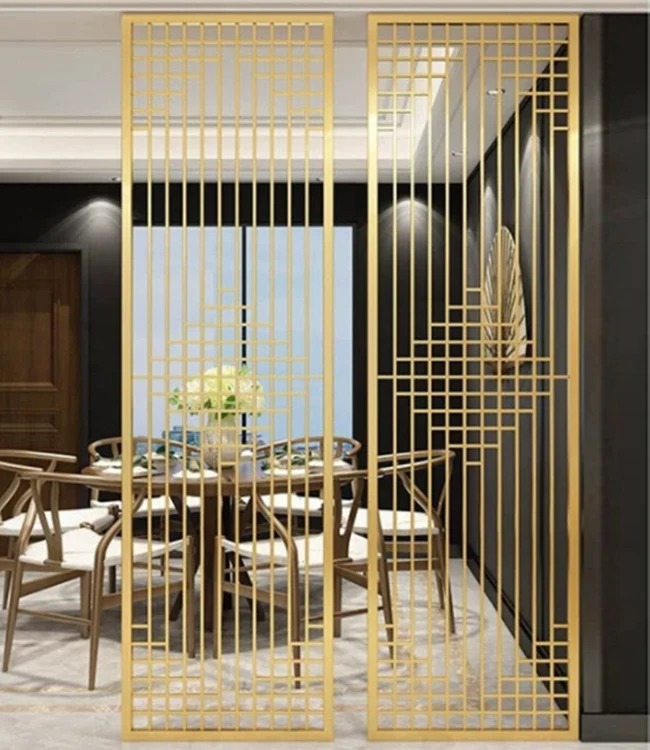
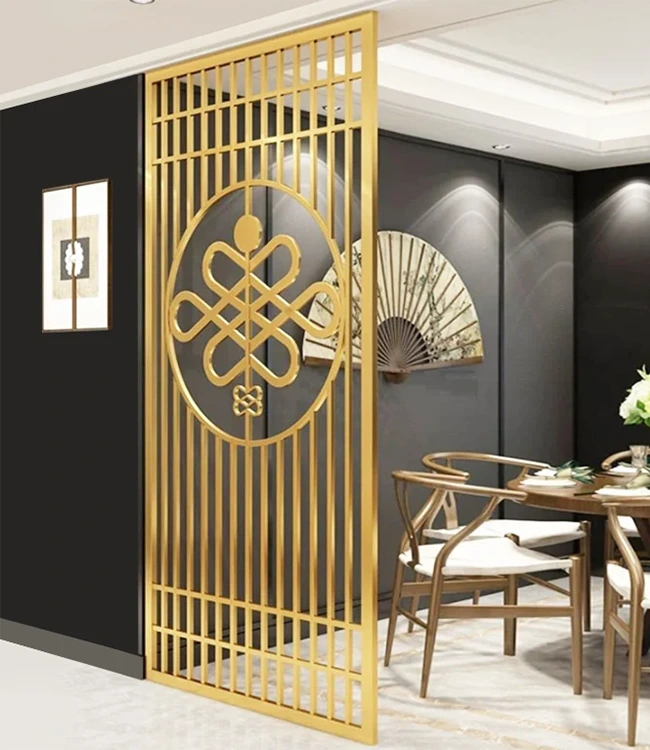
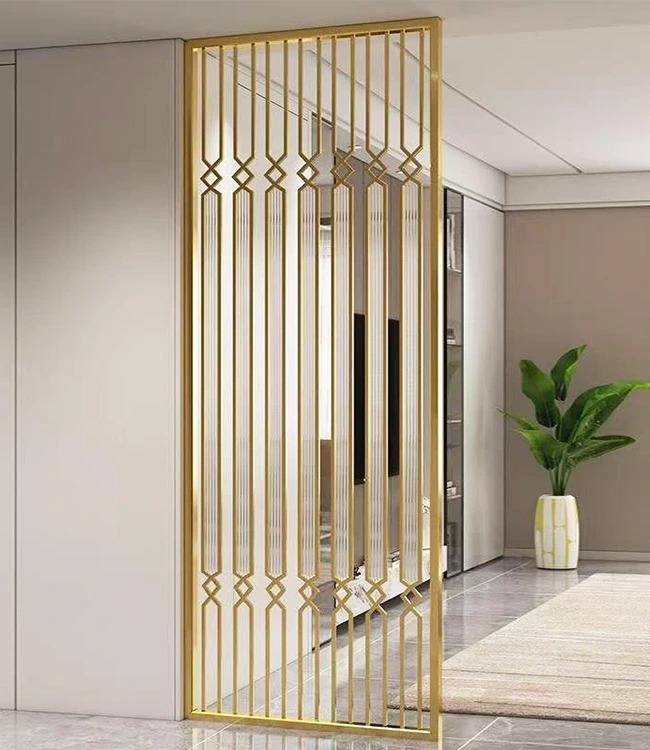
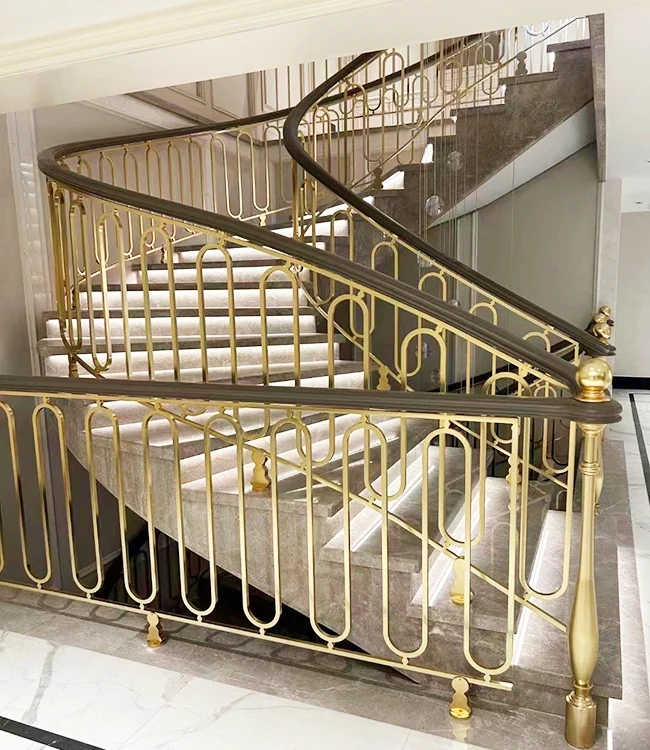
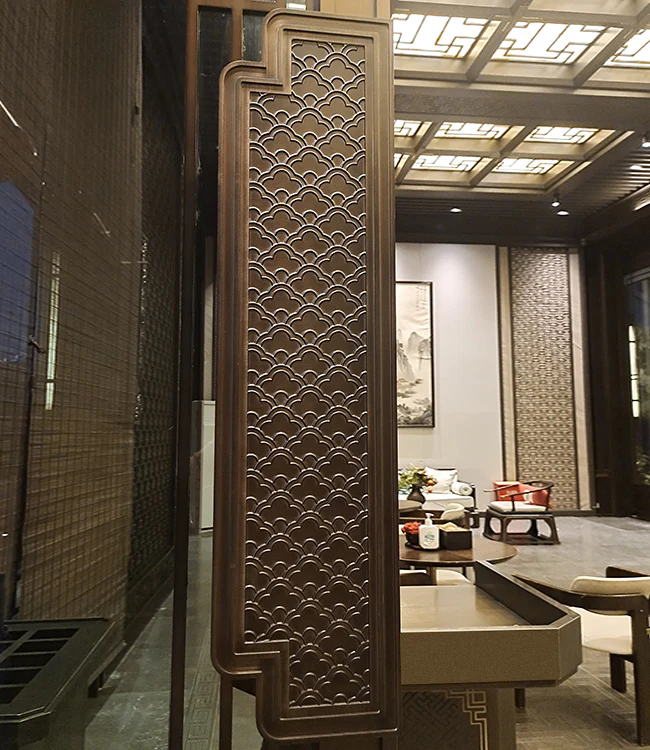
In the realm of architectural metal solutions, the partition screen has evolved from a mere spatial divider to a defining feature of interior and exterior design. For industry professionals seeking functional elegance, understanding fabrication nuances, material behavior, and structural integration is critical. This article examines technical and commercial considerations surrounding this versatile product, with insights drawn from established manufacturing expertise.
Modern construction projects increasingly demand elements that balance openness with delineation. Perforated, laser-cut, or woven metal barriers now serve acoustic, visual, and circulation control functions. Unlike fixed walls, these movable or semi-permanent installations offer adaptability while maintaining aesthetic continuity. Their rise correlates with open-plan offices, luxury retail layouts, and hospitality zones where zoning without full enclosure is preferred. The partition screen has become a signature solution in such scenarios due to its blend of transparency and definition.
Stainless steel, aluminum, and corten remain dominant choices. Each alloy brings distinct mechanical properties: stainless offers corrosion resistance for high-humidity zones; aluminum provides weight advantages for suspended configurations; corten develops a stable rust patina for exterior weathering. Surface finishing—from mirror polish to powder coating—affects both light reflection and maintenance schedules. Load-bearing calculations must account for panel thickness, connection methods, and potential dynamic forces like wind or accidental impact.
Effective deployment requires coordination with HVAC, lighting, and fire safety protocols. Perforation patterns influence air diffusion and sound attenuation. Lighting designers often incorporate backlighting to highlight cut-out motifs, transforming a functional metal barrier into a luminous feature. Fire codes mandate non-combustible materials for escape routes, making metal an obvious compliant choice. Furthermore, seismic anchoring becomes necessary in earthquake-prone regions, demanding engineered floor or ceiling tracks.
Achieving tight tolerances in laser cutting, bending, and welding defines the performance of any metal divider. Warpage during welding can compromise flatness, while inconsistent gap spacing detracts from visual rhythm. Advanced manufacturers employ CNC machinery with real‑time feedback loops. Quality checks include dimensional verification using coordinate measuring machines, surface roughness tests, and salt spray trials for coating adhesion. Only when these benchmarks are satisfied can a product claim suitability for high-traffic commercial environments. Every partition screen leaving a professional workshop must undergo these rigorous protocols.
The table below outlines typical structural configurations encountered in the industry. Each format addresses different spatial and budgetary parameters.
| Configuration Type | Primary Material | Typical Applications | Key Fabrication Challenges |
|---|---|---|---|
| Floor-mounted rigid panels | Stainless steel (brushed finish) | Lobbies, exhibition halls | Leveling on uneven substrates, seismic anchorage |
| Ceiling-suspended modular units | Aluminum (powder coated) | Airport lounges, open offices | Acoustic sealing, sway control |
| Folding or sliding screens | Mild steel with protective coating | Multipurpose rooms, restaurants | Hinge durability, track alignment |
| Fixed exterior wind screens | Corten steel (weathered finish) | Rooftop terraces, coastal walkways | Rust runoff management, wind load certification |
Mass-produced dividers rarely satisfy distinctive architectural visions. Customization involves pattern design—geometric, floral, abstract—as well as variable transparency levels. Laser cutters can generate intricate voids down to fractions of a millimeter, but minimum web widths must respect material gauge to avoid warping during cutting. Welded assemblies require jigs to ensure repeatability. For curved or folded configurations, press brake tonnage and tooling radii directly influence achievable forms. Designers should provide dimensioned 2D drawings plus 3D models for collision detection with MEP systems. A well-engineered partition screen accommodates both aesthetic ambitions and structural realities.
Raw metal, if unprotected, oxidizes. Passivation of stainless steel removes free iron, enhancing corrosion resistance. PVD (physical vapor deposition) coating produces brass, bronze, or black finishes without paint chipping. For outdoor applications, anodized aluminum resists UV degradation. Powder coating thickness should be verified with eddy current gauges. Periodic maintenance—cleaning with non-abrasive agents and reapplying protective wax—extends service life significantly. Neglecting these steps leads to pitting, fading, or galvanic corrosion where dissimilar metals contact.
Efficient manufacturing of custom metalwork hinges on raw material availability, machine scheduling, and finishing capacity. Laser cutting represents the initial stage, followed by deburring, forming, welding, and surface treatment. Each step introduces potential delay if quality discrepancies arise. Conversely, vertically integrated workshops—where design, processing, and finishing occur under one roof—reduce coordination risks. Experienced source manufacturers maintain safety stock of common grades (e.g., 304 stainless, 6061 aluminum) and deploy nesting software to optimize sheet usage, directly affecting cost and speed.
Exporting large metal panels requires careful packing: individual foam wrapping, edge protectors, and crating according to ISPM standards for wood. Sea freight costs depend on volume rather than weight for bulky items. Break-bulk or flat-rack containers accommodate oversized screens. Documentation—commercial invoice, packing list, bill of lading—must match harmonized system codes for metal furniture parts. Insurance against handling damage is advisable. Delivery terms like EXW or FOB shift responsibility at defined transfer points, influencing final landed cost.
Not all fabrication shops possess the capability to deliver high-specification metal dividers. Prospective partners should be assessed based on equipment inventory (fiber lasers with up to several kilowatts, CNC press brakes with ten-foot beds, robotic welding cells), quality certifications, and a demonstrated portfolio of complex projects. On-site or remote factory audits help verify housekeeping, machinery maintenance, and operator skill levels. Additionally, prototype approval before mass production mitigates misinterpretation of drawings. The manufacturer’s willingness to share metallurgical test reports and finish samples signals transparency. When sourcing a partition screen, such due diligence separates reliable suppliers from inconsistent ones.
When a factory houses in-house engineering, communication lags disappear. Draftsmen using SolidWorks or AutoCAD can immediately adjust joint details or hole patterns based on material constraints. This contrasts with outsourcing design to third-party studios, where file translations often introduce errors. Moreover, integrated teams offer value engineering suggestions—replacing welded tabs with interlocking slots, for instance—that simplify assembly without compromising visual intent. Such synergies directly benefit the end client through reduced lead time and better build quality.
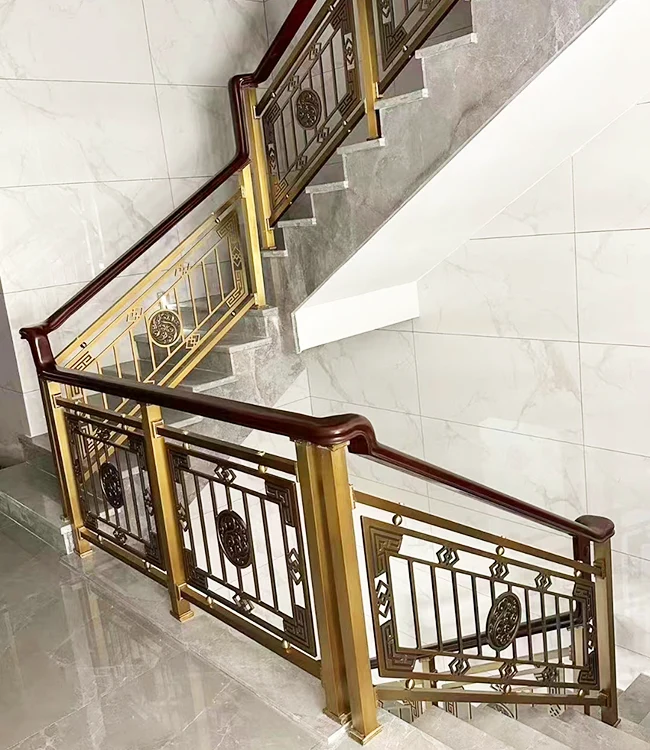
Based in Guangdong’s manufacturing hub, Foshan Nante Metal Products Co., Ltd. has cultivated over thirteen years of production experience covering design, processing, fabrication, and sales. The company’s specialization spans metal screens, stair guardrails, murals, handles, stainless steel constant-temperature wine cabinets, mirror frames, and other personalized metal solutions. Maintaining a professional in-house design team, the factory assists clients in translating conceptual sketches into manufacturing-ready drawings. The operational philosophy centers on quality consistency, product innovation, competitive pricing, and responsive supply scheduling—aiming for a state where process excellence becomes the standard.
Foshan Nante’s production facility in Foshan City operates with dedicated work cells for laser cutting, forming, TIG welding, and multi-stage finishing. Emphasis is placed on surface uniformity, edge safety (deburred and chamfered), and packaging robustness for global transport. For the partition screen category specifically, the manufacturer offers customizable hole patterns, frame thicknesses, and mounting hardware options. By prioritizing transparent communication and sample verification prior to full runs, the company aligns with project timelines and technical specifications. Collaboration starts from initial inquiry, ensuring that the final delivered metalwork supports the architectural intent without unforeseen obstacles.