News

How Can a Partition Screen Solve Privacy and Flow Problems Without Permanent Renovation?

2025-12-25 0 Leave me a message

Abstract

A Partition Screen is one of the fastest ways to “fix” a space that feels too open, too noisy, or too visually chaotic—without touching structural walls. But buyers often run into the same pain points: screens that wobble, finishes that show fingerprints, designs that block light, and suppliers who can’t translate a pretty picture into buildable shop drawings.

In this guide, I’ll break down what actually matters when choosing a Partition Screen for offices, restaurants, villas, galleries, and retail spaces. 

Quick promise: If you can describe your space, your privacy goal, and your cleaning tolerance, you can choose a Partition Screen that looks premium and stays stable for years—without guesswork.


Table of Contents


Outline

  1. Identify the pain point: privacy, flow, acoustics, or visual zoning
  2. Match the screen type to the behavior of the space
  3. Choose material and finish based on maintenance reality
  4. Lock the design with the right dimensions, stability, and safety details
  5. Purchase with clear specs, drawings, and quality checks
  6. Install correctly and maintain lightly

The real problems a Partition Screen should solve

Partition Screen

People don’t buy a Partition Screen because they suddenly fell in love with “screens.” They buy it because the space is misbehaving. Here are the most common pain points I see (and how a smart screen selection fixes them).

Pain point

No privacy in open-plan layouts

Pain point

Messy sightlines and awkward backgrounds

Pain point

Bad flow around entrances and pathways

Pain point

Noise fatigue from “one big room”

  • Privacy without darkness: A well-designed Partition Screen blocks direct sightlines while still letting light pass through.
  • Zoning without construction: You can create “rooms” inside a room—waiting area, reception, display zone—without permits for new walls.
  • Brand upgrade: A signature pattern or premium finish reads like a design decision, not a patch.
  • Safety and direction: Screens can guide foot traffic and reduce collisions in tight commercial layouts.
A Partition Screen works best when you treat it like a functional building component, not only a decorative object.

What a Partition Screen is and is not

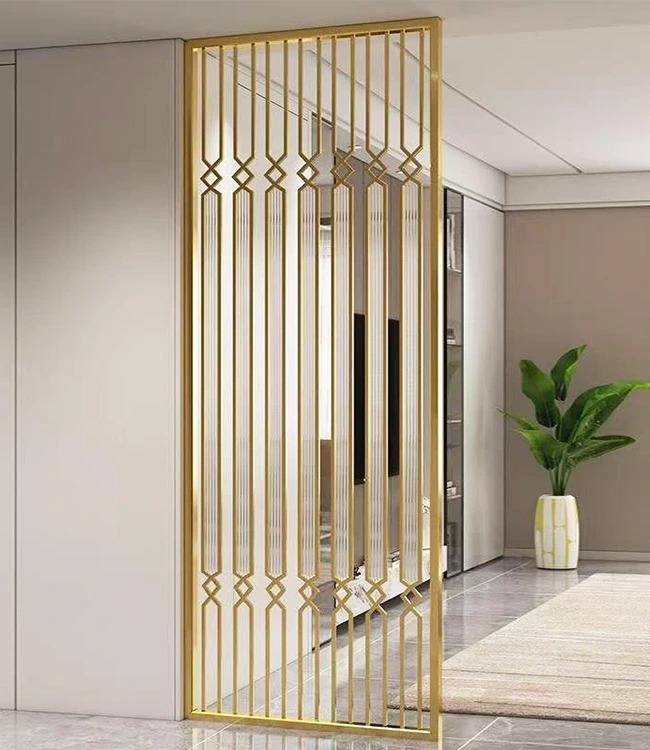
A Partition Screen is a non-structural divider that separates spaces visually and functionally. It can be fixed, semi-fixed, or movable. It’s typically used to create privacy, define zones, or enhance design—without changing the building structure.

What it is not: it’s not a load-bearing wall, not a full acoustic enclosure, and not a substitute for code-required fire-rated separations (when those are legally required). If you need certified fire compartmentation, you should consult an architect or code specialist first.

Rule of thumb: If you need flexible zoning and visual control, choose a Partition Screen. If you need guaranteed sound isolation or legal separation, you may need walls, doors, or certified assemblies.


Types and where each one wins

Choosing the “wrong” type usually leads to buyer regret: wobble, blocked lighting, or a screen that looks too heavy for the space. Start with behavior: how people move, how often the layout changes, and how much visibility you want.

Partition Screen type Best for Watch-outs
Floor-to-ceiling fixed screen Hotels, lobbies, showrooms, long-term zoning, premium “architectural” look Needs accurate site measurement and proper anchoring; plan cleaning access
Freestanding screen Rental spaces, pop-up displays, quick privacy corners, flexible layouts Stability depends on base design and weight distribution
Half-height divider Reception areas, queue management, café seating separation Too low and it doesn’t block sightlines; too tall and it feels oppressive
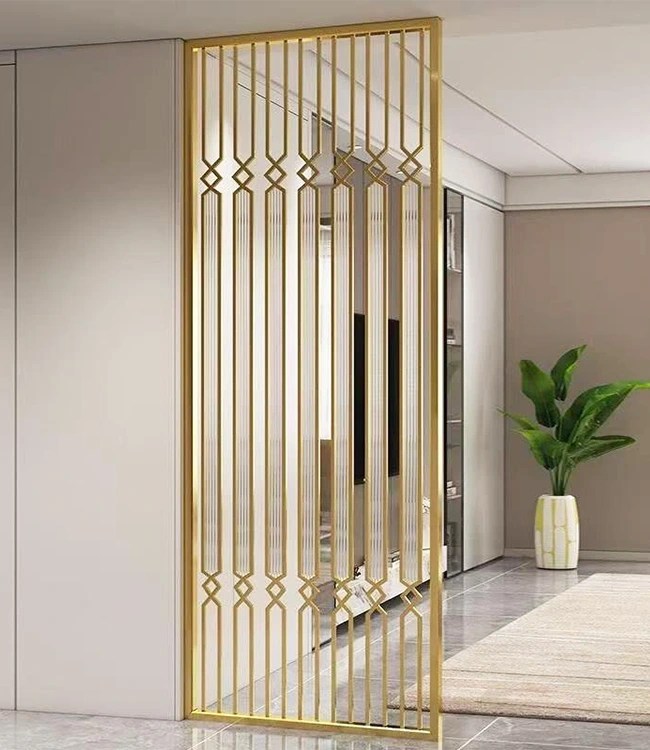
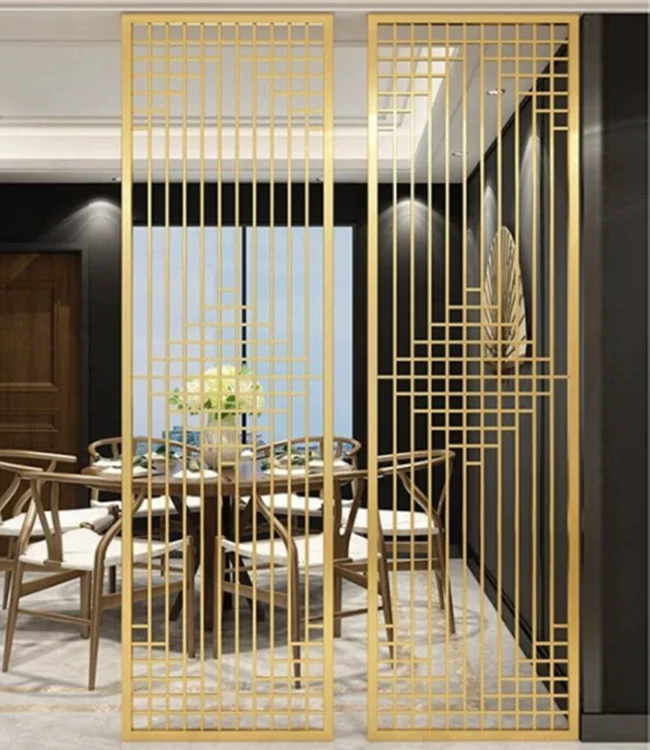
Decorative patterned screen Brand statements, feature walls, “privacy with light” in modern interiors Pattern openness affects privacy; sharp edges must be handled correctly

Material and finish decisions that change everything

The biggest hidden cost of a Partition Screen is not the first purchase—it’s maintenance, corrosion, and surface wear over time. That’s why material and finish should be chosen based on environment, cleaning habits, and touch frequency.

Common metal choices

  • Stainless steel: Strong, modern, and highly corrosion-resistant when matched to the environment. A go-to for long-term commercial use.
  • Aluminum: Lighter weight, good for large panels, and friendly to certain fabrication methods.
  • Copper or brass-toned metals: Warm luxury look, often used for boutique interiors and statement pieces.

Finish choices that impact real-world usability

  • Brushed or hairline: Hides fingerprints better than mirror surfaces and fits modern interiors.
  • Mirror polished: High glam, great for luxury spaces, but shows smudges and requires frequent wipe-down.
  • Etched, embossed, or sand-blasted: Adds texture and reduces glare; good for “privacy with light.”
  • Coated finishes: Powder coating or baking paint can add color consistency and protection when specified correctly.

Practical advice: If the screen will be touched often (restaurants, retail), prioritize finishes that hide fingerprints. If it’s mainly a visual divider (lobby feature), you can choose more reflective finishes for impact.


Design factors buyers regret ignoring

Most buyers focus on the pattern first. That’s understandable—but a Partition Screen fails or succeeds on engineering details. Here are the factors that prevent the “looks good in photos, awful in real life” outcome.

1) Dimensions that match sightlines

Decide what you’re hiding: seated faces, standing bodies, or background clutter. For example, a screen that blocks a seated sightline can be lower than one intended to hide a busy corridor behind a reception desk. Measure eye level in the real space before finalizing height.

2) Openness ratio that balances privacy and light

More open patterns keep the space airy but may not deliver privacy. Denser patterns give privacy but can feel heavy. A balanced approach is to combine denser geometry at eye level with more open design above to keep brightness.

3) Stability and anchoring

Freestanding designs need a base that resists tipping and wobble. Fixed screens need correct anchors for floor and wall conditions. If the floor is stone, tile, or wood, anchoring methods vary—this should be confirmed before production.

4) Safety details that protect users and your liability

  • Rounded or properly finished edges reduce scratch risk.
  • Consistent weld quality prevents sharp micro-spurs.
  • For high-traffic areas, avoid patterns that create snag points for bags or clothing.

5) Cleaning reality

Intricate patterns look stunning, but they collect dust. If your team won’t detail-clean weekly, choose designs with smoother geometry or larger openings. A Partition Screen should make your space easier—not add a maintenance headache.


A buyer checklist you can copy-paste

If you’re sourcing a Partition Screen for a project, this checklist prevents vague quotes and “surprise changes” later. You can paste this into an inquiry email and request the supplier to reply point-by-point.

Spec item What to define Why it matters
Installation type Freestanding, floor-to-wall, floor-to-ceiling, ceiling-hung, or combined Determines structure, anchoring, and stability requirements
Material and grade Stainless steel grade, aluminum series, or other metal type Affects corrosion resistance, strength, and price
Finish Brushed, mirror, sand-blasted, etched, embossed, coated Changes maintenance, fingerprints, and visual style
Color Gold, rose, bronze, champagne, silver, coffee, or custom Ensures compatibility with the interior palette
Pattern Reference image or CAD sketch with openness preference Directly impacts privacy and light transmission
Dimensions Height, width, thickness, and any split panels Prevents site mismatch and reduces rework risk
Packaging and shipping plan Protective layers and crate method Reduces scratch/dent risk in transit

Short decision list

  • If you need a luxury look with long service life, a stainless steel Partition Screen is usually the safest bet.
  • If layout changes often, prioritize freestanding stability and manageable panel sizes.
  • If cleanliness is a concern, choose finishes and patterns that don’t punish you for normal living.

Installation and lifecycle care

Partition Screen

A Partition Screen that is designed well can still fail if it’s installed casually. Here’s the practical approach.

Installation steps that reduce risk

  1. Confirm surfaces: Identify floor type and whether you can drill, anchor, or need alternative mounting.
  2. Verify measurements on site: Re-check width/height after finishes are installed (tile thickness and skirting can change clearances).
  3. Dry-fit positioning: Mark centerlines, sightlines, and walk paths before final fixing.
  4. Anchor and test stability: Apply gentle lateral force to confirm wobble is within acceptable range.
  5. Finish protection: Remove protective film last to avoid scratches during installation.

Care that keeps the screen looking new

  • Use soft cloths to reduce micro-scratches.
  • For touch-heavy areas, set a simple wipe schedule rather than waiting for visible grime.
  • Avoid harsh abrasives on decorative finishes unless the supplier confirms compatibility.

Note: Cleaning methods vary by finish. If you’re unsure, request a care guide with the exact finish and coating system used.


Use cases that map to real layouts

When a buyer says “I need a Partition Screen,” I usually ask one question: “What should people feel when they walk through the space?” The answer often tells you which direction to go.

  • Office: Reduce visual distraction behind desks and create meeting corners without building new rooms.
  • Restaurant: Add privacy between tables, guide queues, and elevate the interior mood without blocking staff movement.
  • Villa or apartment: Separate entry from living room, define dining zone, or hide storage areas with an elegant statement piece.
  • Retail and showroom: Direct customer pathways and create “product moments” that feel curated.
  • Gallery and sales center: Use patterned screens as art-like backdrops while controlling sightlines.

If you want a single solution that balances durability, design, and low maintenance, many projects choose a stainless steel Partition Screen. For custom fabrication and consistent finishing workflows, manufacturers like Foshan Nante Metal Products Co., Ltd. typically support OEM/ODM-style customization and project-specific sizing.


FAQ

Q1: Will a Partition Screen make a small room feel smaller?

Not if you choose the right openness ratio and placement. A patterned Partition Screen can create separation while keeping light and depth. Avoid overly dense patterns in tight rooms unless privacy is the top priority.

Q2: Which finish is best for high-touch commercial spaces?

In many cases, brushed or textured finishes are easier to live with because they hide fingerprints better than mirror finishes. If your brand needs a glossy look, plan a simple cleaning routine so the surface always looks intentional.

Q3: Can a Partition Screen help with noise?

It can reduce visual distraction and slightly change sound reflections, but it won’t replace acoustic walls. If noise is a major pain point, combine the Partition Screen with acoustic panels, soft furnishings, or ceiling treatments.

Q4: What information should I send for a custom Partition Screen quote?

Provide installation type, dimensions, preferred material, finish/color, a pattern reference, and the usage environment (indoor/outdoor, humidity, touch frequency). The more specific the brief, the fewer revisions you’ll need.

Q5: How do I avoid wobble with freestanding screens?

Ask about base structure, weight distribution, and recommended maximum panel size. For tall screens, consider semi-fixed anchoring or a wider base footprint.

Q6: Are metal Partition Screens hard to maintain?

Not when the finish matches your lifestyle. Many metal screens are designed to be low-maintenance with simple wipe cleaning, especially when corrosion resistance and surface treatment are specified correctly.


Conclusion and next steps

A Partition Screen is a high-impact upgrade when you use it to solve real problems: privacy, flow, and visual calm. The best results come from matching the screen type to space behavior, choosing a finish you can realistically maintain, and buying with clear specs instead of vague inspiration photos.

Ready to move from idea to a buildable solution?

If you’re planning a custom Partition Screen and want help turning your layout into a stable, easy-to-maintain design, reach out to Foshan Nante Metal Products Co., Ltd. with your dimensions and style preference—then contact us to get a practical quote, finish recommendations, and a clear production plan.

Related News
Leave me a message
X
We use cookies to offer you a better browsing experience, analyze site traffic and personalize content. By using this site, you agree to our use of cookies. Privacy Policy
Reject Accept