News

How Can an Aluminum Facade Fix the Most Common Building-Envelope Headaches?

2026-02-26 0 Leave me a message

Abstract

An Aluminum Facade can look like a “design choice,” but for many owners and contractors it’s really a problem-solver: reducing maintenance, improving weather resistance, hiding imperfect substrates, and speeding up installation when schedules are tight. This article breaks down what an aluminum facade is, where it performs best, the real cost drivers (not just the price per square meter), and how to avoid the failure points that cause leaks, oil-canning, staining, and costly rework. You’ll also get a practical checklist, a comparison table, and a FAQ to help you specify with confidence.


Table of Contents


Outline

  1. Identify the pain points (leaks, fading, corrosion, slow installation, uneven walls).
  2. Choose the right system (panels, cassette, rainscreen, louvers, perforated).
  3. Lock performance details early (wind load, thermal movement, drainage, fire strategy).
  4. Control cost drivers (finish, thickness, substructure, detailing, logistics).
  5. Install with a repeatable checklist and documented inspections.

What Problems Are Clients Actually Trying to Solve?

Most façade conversations start with aesthetics, but the purchase decision usually happens because something hurts:

  • Water leaks and staining from poorly drained cladding or failed sealant lines.
  • Maintenance overload with painted masonry, cement board, or low-grade coatings that chalk and fade.
  • Unpredictable schedules where wet trades and curing times slow down handover.
  • Uneven substrates on renovation projects that make “flat” finishes look wavy and cheap.
  • Coastal corrosion (salt air), industrial pollution, or constant UV exposure.
  • Energy comfort complaints caused by thermal bridging, poor shading, or inadequate envelope detailing.

A well-designed Aluminum Facade addresses these issues by combining stable metal cladding with a controlled drainage/ventilation strategy and finishes built for outdoor abuse.


What Is an Aluminum Facade in Plain English?

Aluminum Facade

An Aluminum Facade is an exterior skin made from aluminum components (panels, cassettes, louvers, fins, or screens) fixed to a subframe. In many projects, it functions as a rainscreen: rain is blocked by the outer layer, while any water that sneaks in is guided down and out through drainage paths, and the cavity behind the cladding helps pressure-equalize and ventilate moisture.

The key idea is simple: instead of betting everything on one perfect sealant line forever, you design the façade to manage water safely and move with temperature without warping or cracking.


Which Aluminum Facade System Fits Your Project?

There isn’t one “best” aluminum façade. The right choice depends on wind exposure, geometry, budget, and how clean you want the lines to look.

  • Flat panels
    Good for straightforward elevations. Cost-effective and fast when the module size is optimized for sheet yield and handling.
  • Cassette panels
    Edges are folded for stiffness and cleaner joints. Often chosen to reduce oil-canning and improve flatness perception.
  • Rainscreen cladding with rear ventilation
    A system approach focused on drainage paths, airflow, and tolerance for moisture—excellent for long-term reliability.
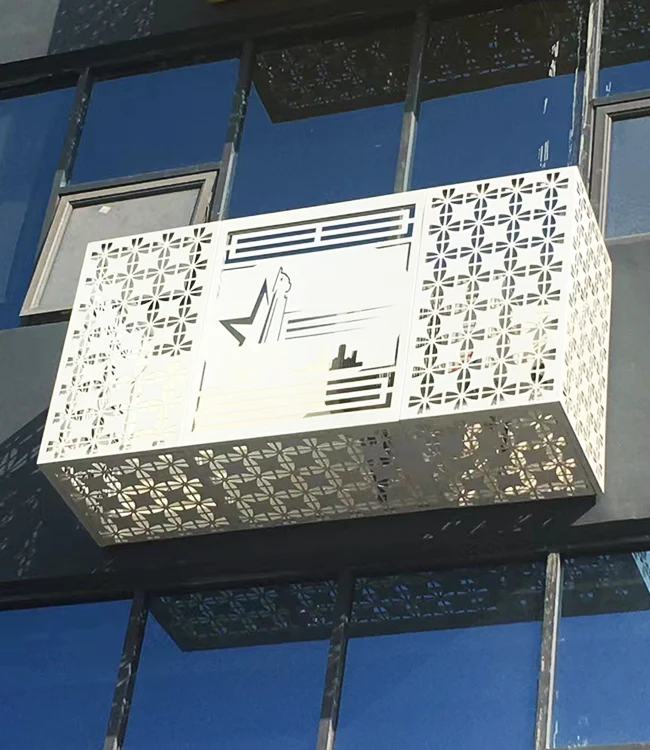
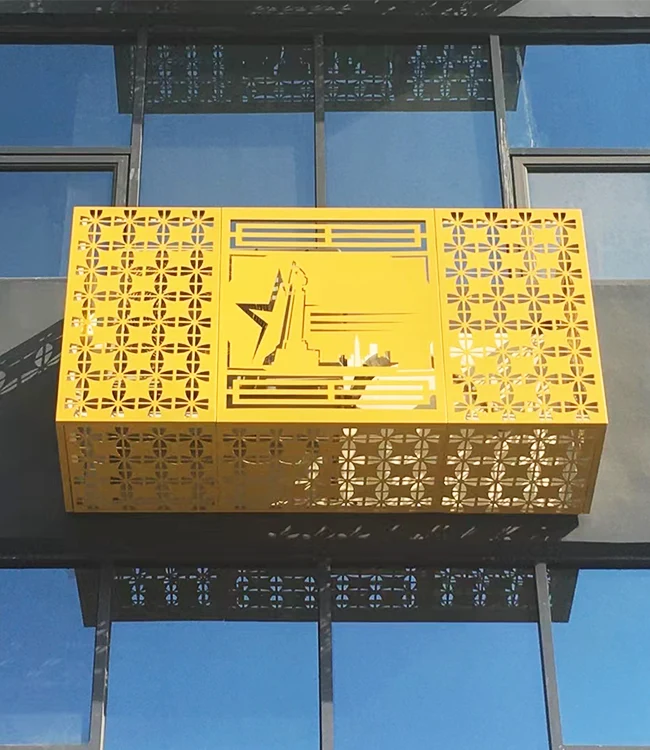
  • Perforated screens
    Used for parking structures, equipment screening, and decorative layers. Also helps with ventilation needs.
  • Louvers and fins
    Designed for solar control, privacy, and a “depth” look. Great when overheating and glare are part of the pain.

Practical tip: if your building has many corners, curves, and reveals, spend time early on a repeatable module strategy. Complex geometry can be done, but uncontrolled custom shapes are where budgets and timelines go to die.


Performance That Matters on Site

When a façade fails, it usually isn’t because aluminum “is bad.” It’s because details ignored physics. Here are the performance topics that protect you:

  • Wind load and deflection control
    Panel thickness, stiffening returns, subframe spacing, and anchoring must match local wind demands. If you see “drumming” or visible panel movement, it’s not just annoying—fasteners and joints fatigue.
  • Thermal movement
    Aluminum expands and contracts. The system must allow controlled movement (slotted holes, floating clips, joint sizing) so panels don’t buckle or telegraph stress into corners.
  • Drainage and pressure management
    Water will get behind cladding. The question is whether it exits safely. Look for weep paths, cavity continuity, and smart flashing at transitions.
  • Finish durability
    Color stability, chalk resistance, and corrosion behavior depend on coating type and pretreatment, not just “it’s powder-coated.”
  • Fire strategy integration
    Fire performance is system-level. Insulation, cavity barriers, and detailing should be aligned with the project’s approved approach.
  • Acoustic and comfort considerations
    If the façade sits near traffic or mechanical areas, the backing build-up and cavity choices matter for comfort and noise.

What Really Drives Cost and Value?

Clients often ask for “price per square meter,” but that number is meaningless until the scope is clear. These are the cost drivers that actually move your budget:

  • Finish type and color (premium metallics, special textures, high-durability coatings).
  • Panel thickness and stiffening (chosen for flatness and wind performance).
  • Subframe complexity (brackets, thermal breaks, alignment on uneven walls).
  • Joint design (open joint rainscreen vs sealed joints; reveal widths; gasket strategy).
  • Geometry and customization (curves, tapers, unique corner pieces, deep reveals).
  • Testing, mockups, and documentation (an upfront cost that prevents downstream disasters).
  • Logistics (packing, protection film, labeling, installation sequencing).

Value isn’t just “cheaper panels.” A higher-quality Aluminum Facade system often pays back through fewer punch-list items, faster enclosure, lower repaint cycles, and reduced leak risk.


How to Specify Without Getting Burned

If you want fewer change orders and a smoother install, specify the façade like a system, not a pile of parts. Here’s a clean, contractor-friendly approach:

  • Define the system intent
    Is it a drained and ventilated rainscreen? Is it a sealed barrier? Write the intent in the spec so everyone details toward the same goal.
  • State performance requirements
    Wind load criteria, deflection limits, water management expectations, and finish durability targets should be explicit.
  • Require shop drawings that show critical transitions
    Corners, parapets, slab edges, window perimeters, expansion joints, and base flashing are where failures hide.
  • Ask for a facade mockup strategy
    A small mockup can validate flatness, joint appearance, color under real light, and installation tolerances.
  • Control tolerances
    Document acceptable alignment and joint variation. Aluminum systems look “expensive” when the reveals stay consistent.

Installation and Quality-Control Checklist

  • Substrate survey completed (documented deviations and correction plan).
  • Bracket layout verified (line, level, plumb; thermal-break placement as required).
  • Drainage path continuity confirmed (no blocked weeps; correct flashing overlaps).
  • Movement allowances respected (no over-tightened fixings; joints not “stuffed” with sealant where movement is needed).
  • Protective film removal timing planned (too early risks damage; too late can bake on in sun).
  • Panel handling protocol (gloves, edge protection, clean staging area).
  • Daily visual QC (reveal alignment, dents, scratches, coating defects).

Material Comparison Table

Cladding Option Strengths Common Risks Best Use Cases
Aluminum Facade Lightweight, corrosion-resistant, highly formable, clean detailing, fast installation potential Oil-canning if under-designed, movement issues if joints are wrong, finish quality varies by supplier Commercial buildings, renovations, high-visibility modern architecture, coastal/UV-exposed projects
Stone / Thick masonry Premium feel, impact resistance, strong thermal mass High dead load, slower installation, anchoring complexity, higher structural demands Monumental aesthetics, low-rise with strong structure, long-term prestige projects
Fiber cement boards Cost-efficient, familiar to many crews Edge swelling or staining if detailing is weak, repaint cycles, cracking at joints Budget-conscious projects with controlled detailing and maintenance plans
Glass curtain wall Daylight, transparency, modern appearance Glare/overheating, higher cleaning needs, performance depends heavily on system design Office towers, lobbies, signature elevations needing visibility

Maintenance, Cleaning, and Lifespan

Aluminum Facade

One underrated reason clients choose an Aluminum Facade is predictable upkeep. With a stable coating system and sensible detailing, cleaning is typically straightforward: periodic rinsing, mild detergent, and avoiding abrasive pads that scratch finishes.

  • Plan cleaning access early (especially for high elevations and deep fins).
  • Watch runoff paths to reduce streaking (drips often come from poorly detailed edges, not “dirty air”).
  • Keep spare panels from the same batch for future replacements (color batches can vary slightly).
  • Inspect joints and flashings during routine maintenance cycles—small fixes prevent big leaks.

Choosing a Fabricator and What to Ask For

Even the best design can be ruined by inconsistent fabrication. When evaluating suppliers, focus on proof of process, not just a nice catalog.

  • Can they show fabrication tolerances and QC checkpoints?
  • Do they provide clear shop drawings and labeling for installation sequencing?
  • How do they protect panels during packing and transport?
  • Can they support mockups and respond quickly to site feedback?
  • Do they have experience with your system type (cassette, perforated, louvers)?

If you’re sourcing from China, work with a partner that understands export documentation, packaging standards, and the reality of on-site installation needs. For example, Foshan Nante Metal Products Co., Ltd. focuses on aluminum architectural metal solutions and can support façade components with practical deliverables like shop-drawing coordination, modular production planning, and project-oriented packaging—details that often decide whether the install is smooth or painful.


FAQ

Q: Will an Aluminum Facade look “wavy” or show reflections?
A: It can if the panel is too thin, stiffening is insufficient, or the substrate/subframe alignment is poor. Choosing the right thickness, using folded edges or cassette designs, and controlling tolerances greatly reduces this risk.

Q: Is an aluminum facade suitable for coastal environments?
A: Often yes, because aluminum resists corrosion well, but coating selection and proper pretreatment are critical. Also pay attention to dissimilar-metal contact and fastener choices to avoid galvanic issues.

Q: How do I reduce leak risk at windows and slab edges?
A: Treat transitions as first-class details: continuous flashings, reliable overlaps, deliberate drainage routes, and movement-compatible joints. Leaks usually come from missing continuity, not from the field of panels.

Q: Can an Aluminum Facade improve thermal comfort?
A: It can when integrated with insulation, thermal breaks where needed, and shading elements like fins or louvers. The cladding alone doesn’t “insulate,” but the overall build-up can significantly improve comfort.

Q: How long does an aluminum facade last?
A: Lifespan depends on finish quality, environment, and maintenance, but aluminum cladding is widely chosen for long service life because it’s stable, lightweight, and repairable at the panel level.

Q: What should I request in a quotation to avoid surprises?
A: Ask for a clear inclusions list: panel type, thickness, finish system, subframe/brackets, corner pieces, flashings, fasteners, shop drawings, mockup support, packaging method, and lead time assumptions.


Next Step

If your current façade plan feels risky—too many sealant dependencies, too much on-site improvisation, or too much maintenance in the first five years—an Aluminum Facade system approach can simplify the whole story: cleaner detailing, controlled drainage, and faster enclosure when time matters.

Want a quick recommendation based on your building height, climate, and target look? Tell us your elevation type, approximate panel module size, and exposure conditions, and we’ll suggest a practical system direction. Contact us to discuss your project and get a tailored quotation from Foshan Nante Metal Products Co., Ltd..

Back to top

Related News
Leave me a message
X
We use cookies to offer you a better browsing experience, analyze site traffic and personalize content. By using this site, you agree to our use of cookies. Privacy Policy
Reject Accept