News

How Does a Wine Cabinet Protect Taste and Space at the Same Time?

2026-01-28 0 Leave me a message

Abstract

A Wine Cabinet isn’t just “a pretty box for bottles.” It’s a controlled micro-environment designed to prevent the most common reasons wine ends up tasting flat, tired, or simply “not like you remembered.” Heat swings, dry air, harsh light, vibration, and awkward storage all chip away at flavor and aroma over time. This guide breaks down what actually matters when choosing a Wine Cabinet, how to match capacity and zones to your drinking habits, what to check before installation, and how to keep performance stable with minimal maintenance. You’ll also see practical selection checklists, a quick comparison table, and answers to the questions buyers ask right before they hit “buy.”


Table of Contents


Outline

  • Identify the storage problems that ruin wine (and waste space).
  • Learn the “must-have” specs that protect flavor and cork health.
  • Choose the right capacity and shelf layout for your bottle mix.
  • Decide whether you need one temperature zone or more.
  • Use an installation checklist to avoid noise, heat, and ventilation issues.
  • Follow simple care habits that keep a Wine Cabinet stable year-round.

What Goes Wrong Without a Wine Cabinet

Wine Cabinet

If you’ve ever opened a bottle that “should have been great” but tasted dull, the culprit is often storage. Many homes unintentionally create harsh conditions:

  • Temperature swings: Kitchens and living rooms fluctuate daily. Wine prefers stability more than “perfect” numbers.
  • Low humidity: Overly dry air can dry out corks, letting oxygen creep in and accelerate aging.
  • Light exposure: UV and strong indoor lighting can degrade delicate compounds, especially in white and sparkling wines.
  • Vibration: Constant micro-vibrations can disturb sediment and interfere with slow aging.
  • Clutter and inefficiency: Bottles in random racks get forgotten, labels fade, and you rebuy what you already own.

A well-designed Wine Cabinet tackles these issues in one move: it protects taste while turning chaotic storage into a neat, accessible system.


Core Features That Actually Protect Wine

Ignore the hype words and focus on performance. Here’s what moves the needle:

  • Stable temperature control: Consistency matters more than chasing a single “magic number.” Look for control that holds steady despite room changes.
  • Humidity-friendly storage: You don’t need a rainforest, but you do want corks to stay resilient. A cabinet that avoids drying airflow helps long-term.
  • Low-vibration operation: A Wine Cabinet should feel calm—no rattling shelves, no constant buzzing, no door that shudders shut.
  • UV-resistant door options: Tinted glass or solid doors reduce light damage and protect labels.
  • Door seal quality: A solid gasket keeps conditions stable and reduces compressor effort.
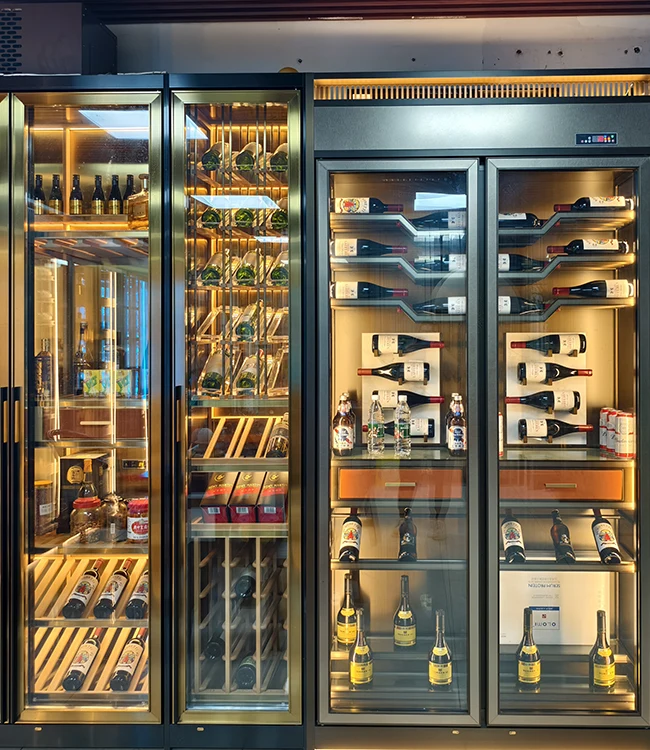
  • Shelf design that fits real bottles: Many collections include Burgundy shapes, Champagne, and broader shoulders—layout matters.

If your goal is “open a bottle and it tastes like it should,” these are the features to prioritize.


How to Choose Size, Capacity, and Layout

Capacity numbers can be misleading because they often assume uniform Bordeaux-style bottles. Your reality is usually mixed shapes. Instead of asking, “How many bottles does it hold?” ask:

  • How many bottles do I keep at once (not how many I wish I kept)?
  • Do I store more reds, whites, or a balanced mix?
  • Do I have wide bottles (Champagne, Burgundy, spirits) that need extra clearance?
  • Do I want display space for frequently opened bottles?

Use this rule of thumb if you want an easy decision:

  • Casual drinker: space for your “current rotation” plus a buffer.
  • Enthusiast: space for rotation + aging section + occasional bulk buys.
  • Entertainer or collector: larger cabinet or multiple zones, with shelves designed for mixed bottle types.

Single Zone vs Dual Zone vs Multi Zone

A Wine Cabinet with more than one zone isn’t automatically “better.” It’s better only if it matches how you drink.

Type Best For Strength Watch Out For
Single Zone Mostly reds, or mostly one style Simple, consistent storage Less flexible if you serve whites often
Dual Zone Regular red + white drinkers Serve-ready convenience Check real usable space per zone
Multi Zone Collectors or mixed-serving homes More precise organization More complexity; install conditions matter

If you mostly store and occasionally chill a few whites, a single zone plus a short pre-chill routine might be enough. If you want grab-and-pour convenience for both reds and whites, dual zone earns its keep.


Why Build Quality and Materials Matter

When you buy a Wine Cabinet, you’re buying a small climate system. Build quality isn’t “nice to have”—it determines stability, noise, and how well the cabinet holds conditions over time.

  • Rigid structure: Reduces vibration and keeps the door aligned.
  • Well-finished metalwork: Helps with durability, clean aesthetics, and long service life.
  • Shelf strength: Bottles are heavy. Shelves should slide smoothly and stay level.
  • Door and hinge integrity: A door that closes cleanly is a big part of temperature consistency.

If you’re considering a metal-focused solution for residential or commercial interiors, Foshan Nante Metal Products Co., Ltd. is a name you’ll see in this category for metal fabrication and cabinet-style products where structure, finish, and long-term durability matter.


Installation Checklist for Real Homes and Real Kitchens

Most “performance complaints” come from installation issues, not the cabinet itself. Before you place your Wine Cabinet, run this checklist:

  • Ventilation: Make sure airflow paths aren’t blocked. If the cabinet needs breathing room, give it space.
  • Heat sources: Avoid placing it next to ovens, dishwashers, radiators, or direct sun.
  • Floor stability: A level, solid surface reduces noise and protects door sealing.
  • Door swing and access: You want shelves to slide fully and bottles to lift out easily.
  • Room temperature reality: If the space runs very hot or very cold, check the cabinet’s recommended operating range.
  • Power safety: Use a proper outlet. Avoid overloaded extension cords for long-term use.

One practical tip: if you’re installing an under-counter Wine Cabinet, confirm the exact cutout dimensions and airflow needs before finalizing cabinetry. This prevents the “looks great, runs loud” situation.


Maintenance and Care That Keep Performance Consistent

A Wine Cabinet doesn’t need babysitting, but it does benefit from basic care:

  • Clean the door seal: A quick wipe keeps the gasket sealing properly.
  • Don’t overload shelves: Overpacking reduces airflow and can cause uneven cooling.
  • Organize by frequency: Put weekly bottles at eye level, aging bottles deeper in. Less door-open time = more stable conditions.
  • Check for dust around vents: Dust buildup can reduce efficiency and increase noise.
  • Give it time after moving: If relocated, let the unit settle before heavy use (especially important for compressor-based models).

Think of it like this: the less your cabinet struggles, the more consistent your wine stays.


Common Buying Mistakes to Avoid

Wine Cabinet

  • Buying for a fantasy collection: Choose for what you store now plus reasonable growth, not a dream cellar overnight.
  • Ignoring bottle variety: If you love Champagne or Burgundy bottles, plan space for them.
  • Focusing only on looks: A beautiful Wine Cabinet that can’t breathe or seal well will disappoint fast.
  • Forgetting the environment: A cabinet in direct sunlight or beside an oven will work harder and may become noisy.
  • Skipping measuring: Doors, hallways, and installation cutouts are the silent dealbreakers.

FAQ

Q: What temperature should I set my Wine Cabinet to?
A: Choose a stable setting that fits your primary storage goal. If you store mostly reds, a moderate, steady setting works well; if you serve whites often, consider a dual-zone cabinet so each style is closer to serving range.

Q: Do I really need dual zone?
A: Only if you regularly want both reds and whites ready to pour. If your drinking habits are mostly one style, a single zone is simpler and often more cost-effective.

Q: Why does my cabinet seem louder at certain times?
A: Noise often increases when the room is warmer, ventilation is restricted, or the cabinet isn’t level. Check airflow clearance and floor stability first.

Q: Can I put a Wine Cabinet in the kitchen?
A: Yes, but avoid placing it right beside heat sources (oven/dishwasher) and ensure proper ventilation. Kitchens fluctuate more, so stable placement matters.

Q: How do I store opened bottles inside a Wine Cabinet?
A: Use a proper stopper or preservation system, keep bottles upright to reduce oxidation contact area, and place them where you won’t forget them.

Q: What shelf layout is best for mixed bottle shapes?
A: Look for adjustable or thoughtfully spaced shelves. If you often buy wider bottles, prioritize flexibility over maximum “advertised capacity.”


Next Step

A Wine Cabinet is one of those upgrades that quietly pays you back: less waste, better taste, and a cleaner living space. If you’re planning a cabinet-style solution that blends durable metal craftsmanship with practical wine storage design, you can explore options with Foshan Nante Metal Products Co., Ltd.—and when you’re ready to match size, layout, and finish to your project, contact us to get tailored guidance and product details.

Related News
Leave me a message
X
We use cookies to offer you a better browsing experience, analyze site traffic and personalize content. By using this site, you agree to our use of cookies. Privacy Policy
Reject Accept